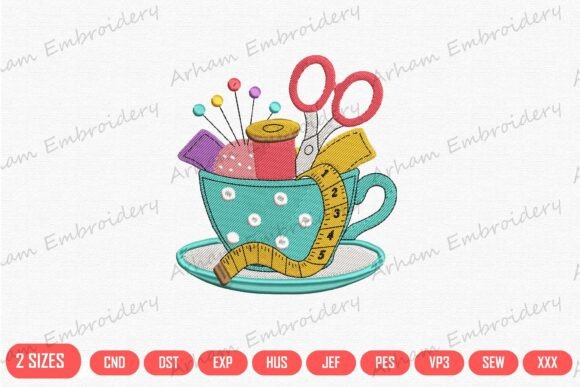
A Professional Review of Vintage Teacup Sewing Essentials
From an embroidery designer's perspective for business applications, Vintage Teacup Sewing Essentials presents an immediate and charming impression. It leans distinctly toward a handmade, friendly, and classic aesthetic. This isn't a stark, modern corporate logo; it's a narrative piece that speaks directly to creativity, craft, and a personal touch. For a small business in the sewing, quilting, or broader handmade sphere, this visual personality is a significant asset. It feels warm, approachable, and intrinsically connected to the values of craftsmanship.
Evaluating the Design for Branded Merchandise and Patches
When considering Vintage Teacup Sewing Essentials for small business merch, we must look beyond its decorative appeal and assess its functional performance as an embroidery file across various applications. The core challenge with any illustrative design is translation into a physical, stitched product.
Strong Applications for Business Use
This design excels in scenarios where its detail and charm can be fully appreciated, and where it reinforces a brand's story.
- Apron Embroidery: For a boutique, café, bakery, or creative studio, this design embroidered on an apron is perfect. The larger surface area allows the teacup and tools detail to shine, making staff uniforms feel special and branded.
- Tote Bag Design: As a primary mark on a canvas or cotton tote, it creates a premium, handmade product feel. It's an ideal customer gift or event merch piece for a craft business.
- Product Packaging & Labels: As a small embroidered accent on a garment tag or a product bundle, it adds tremendous value and visual consistency, signaling care and quality.
- Uniforms & Work Shirts: On a chest or sleeve of a polo or shirt for a florist, pet brand, or local shop, it serves as a friendly, recognizable logo accent that builds customer trust.
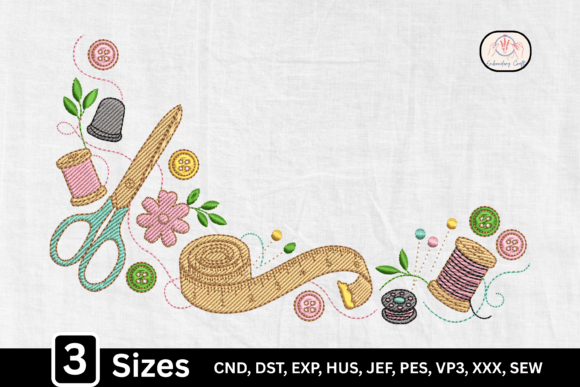
- Large Format Patches: As a standalone embroidered patch (perhaps 4 inches or larger), it becomes a superb asset for Etsy branding, craft business swag, or even as a sellable product itself. The details of the scissors, spools, and measuring tape will be clear.
Considerations and Careful Use Cases
The potential pitfalls for Vintage Teacup Sewing Essentials lie in scaling down and navigating intricate elements. As a professional designer, I advise caution in these areas:
- Small Patch Sizes: If you need a 1.5-inch patch for a cap front or a tiny logo, the condensed details may become muddled. The thread spools and pins could lose definition. Always test the embroidery file at the intended small patch size before production.
- Cap Embroidery: The curved, limited space on a cap front demands simplification. The full teacup composition might need adaptation to avoid high stitch density in a small area.
- Dark Uniforms & Fabric Texture: On dark fabrics, thread color contrast is paramount. The described "colorful" elements must translate into thread choices that pop against navy or black. Always test on real fabric with the proper stabilizer.
- Items for Frequent Washing: On merchandise like utility shirts or aprons that face heavy wear, closely inspect the design's outlines and spacing. Tight, dense stitching can be less durable over time.
The Impact on Brand Identity and Customer Perception
Using Vintage Teacup Sewing Essentials as a core design asset for your commercial embroidery projects isn't merely about decoration. It's a strategic brand decision.
This design inherently elevates brand identity for businesses centered on creativity. It communicates playfulness and elegance simultaneously, suggesting that your brand values both skill and joy. This builds customer engagement and recognition—people remember a distinctive, story-driven logo more easily than a generic text mark. On custom apparel or product labels, it increases perceived product value, making items feel less mass-produced and more personally crafted. For an Etsy seller or handmade brand, this visual alignment is crucial for professionalism and buyer trust.
Practical Designer Notes for Production
Before running this digital embroidery file for any business application, follow these practical steps to ensure a flawless finished product.
- Test in Black and White First: Stitch a sample using only black thread on white fabric and white on black. This reveals the pure structure of the design, highlighting any areas where detail might collapse without color differentiation.
- Verify Hoop Size and Stabilizer: Confirm the required hoop size for the design from the file provider. Match the stabilizer to your target fabric—a tote bag needs different support than a lightweight apron.
- Create a Printable Mockup for Client Approval: If you're an embroidery shop producing for a client, always provide a mockup. This avoids miscommunication and ensures the small business owner sees how it aligns with their vision.
- Compare Beside Other Brand Assets: Place the stitched sample beside your business's other graphics (website, packaging) to check for visual consistency.
- Confirm Commercial Licensing: Before using the file for any merchandise you sell or branded uniforms, explicitly verify that your purchase includes a commercial embroidery license for business use.
Ultimately, Vintage Teacup Sewing Essentials is a potent design for businesses that want their branding to feel human, creative, and connected to craft. Its success hinges on mindful application—choosing the right canvas, like an apron or tote, where its story can be fully told. By rigorously testing its performance at small sizes and on various fabrics, you can transform this charming illustration into a robust, professional emblem for your small business.